
Grand Theft Auto VI (GTA 6) launched Thursday, November 19, on PlayStation 5 and Xbox Series X|S. After years of anticipation, it is the entertainment event of the year. Rockstar Games has built one of the most celebrated franchises in any medium, and millions of fans around the world are already playing.
A launch this big also touches the issues we work on every day. The networks that deliver the game, the grid that powers them, and the industry that makes games are all live policy questions in Washington and in state capitols across the country. They come into focus while Congress is back for its lame duck session and legislatures prepare for their 2027 sessions. Here is where they stand.
Getting GTA 6 home
Most players are downloading GTA 6, and boxed copies come with a download code. That makes a reliable high-speed connection part of the experience. For the households still without one, a launch this size shows why broadband is now basic infrastructure.
The federal Broadband Equity, Access, and Deployment (BEAD) program is built to close that gap. On August 25, the National Telecommunications and Information Administration (NTIA) approved the last of all 56 state and territory final proposals. Most states are now moving into construction. On November 13, states received lists of locations eligible for a new funding round, and NTIA is targeting a December application window.
The awards are only the start. Construction, permitting and adoption will decide whether every household is online for the next big launch.
Powering the next wave of data centers
Data centers are what make modern entertainment work. They host online games, stream video, deliver downloads like GTA 6 and run the AI tools changing how we work. They also bring billions in private investment and skilled jobs. The policy question now is how fast the grid can keep up, especially in PJM, the grid operator serving more than 65 million people from the mid-Atlantic to Illinois, including Pennsylvania.
Washington is working on that question with industry at the table. In March, seven major AI companies, including Amazon, Google, Meta and Microsoft, signed the White House’s Ratepayer Protection Pledge, committing to cover the cost of their own energy needs. The Ratepayer Protection Act, which builds on that pledge, cleared the House Energy and Commerce Committee 52 to 0 in July and passed the House 417 to 3 in September. It now goes to the Senate. The Data Center Coalition has said it supports the bill’s underlying goal.
In the Senate, a bipartisan permitting bill co-authored by Senator Sheldon Whitehouse would speed federal reviews for energy projects, including transmission lines and pipelines. It would also have data centers pay for the grid upgrades they use, under rules from the Federal Energy Regulatory Commission (FERC) due within 90 days. The Data Center Coalition says it is still reviewing the bill.
PJM plans to file its own proposal with FERC in December on bringing large new loads onto the grid. Many states, as the next sections show, are already setting their own rules.
Online play after the GTA 6 launch
GTA 6 launched with its single-player story, and fans expect an online mode to follow. GTA Online arrived about two weeks after GTA V and is still going strong more than a decade later.
Online play runs on servers in data centers, so the next chapter of GTA depends on the same infrastructure. Gaming is the part of the digital economy most people use every day. It is a clear way to show why building data centers, and the power to run them, matters to everyone.
Kids, games and Congress
These bills don’t single out GTA 6, which is rated M for Mature (17 and older). But a launch this size puts games in the spotlight while Congress weighs new rules for online games played by minors. On June 29, the House passed the Kids Internet and Digital Safety Act, known as the KIDS Act (H.R. 7757), by a vote of 267 to 117. The package combines more than a dozen bipartisan proposals, including the Kids Online Safety Act, COPPA 2.0 and the Safer GAMING Act.
For game companies, Title III is the section to watch. It would require online video game providers to offer parental controls that start at the most restrictive settings for chat, purchases and time spent playing.
The Senate is on a different track. The Commerce Committee advanced an amended version of the Kids Online Safety Act (S. 1748) on August 5, but Senator Rand Paul blocked a fast-track floor vote on September 30. The House version drops the duty of care provision that has defined the Senate bill. Resolving that difference is the main question for the lame duck and, if it slips, for the 120th Congress.
What the states are doing
States are not waiting on Washington. On every issue in this post, legislatures and governors across the country are already acting.
Data centers
States are competing for data center investment while setting clear rules for connecting to the grid. In 2026, at least 34 states introduced nearly 150 bills setting new rules for data center growth, and 25 passed. Texas set an early model with Senate Bill 6 in 2025, creating interconnection standards for large loads. Virginia this year directed regulators to assign the cost of transmission built only for a data center to that facility. Voters weighed in this fall too, as we covered in Data Centers on the Ballot.
Pennsylvania shows how this plays out. In June 2025, Amazon announced at least $20 billion in AI data center campuses across the Commonwealth, the largest private-sector investment in state history. In Harrisburg, the House passed House Bill 1834, sponsored by Representative Rob Matzie, 104 to 95 in March. It would direct the Public Utility Commission to set rules so data centers cover the grid costs tied to their service. The House also passed House Bill 2198, which would repeal the Computer Data Center Equipment Incentive Program. Both are in the Senate, and any bill that does not pass by November 30 starts over in January. Industry groups have cautioned that rules that are too prescriptive could send projects to other states.
Governor Shapiro has paired his push for investment with standards of his own. Executive Order 2026-05, signed August 18, requires data center proposals above 25 megawatts that seek state permits to meet his Governor’s Responsible Infrastructure Development (GRID) requirements. The administration’s stated aim is to move serious projects forward and screen out speculative ones.
Broadband
States run BEAD and are now awarding grants. In Pennsylvania, for example, the Commonwealth’s approved plan covers 69 projects and 129,356 locations without high-speed service. On October 2, Governor Shapiro announced the first $448 million in awards, reaching about 71,000 homes and businesses in 50 counties. The rest are expected before the end of 2026.
Kids online safety
States have gone further than Congress. Utah, Texas and Louisiana have enacted App Store Accountability Acts requiring age verification and parental consent before minors download apps or make in-app purchases. The Texas law took effect after a Fifth Circuit ruling in May 2026. Alabama’s law and California’s Digital Age Assurance Act both take effect January 1, 2027. Console storefronts like PlayStation and Xbox appear to fall outside the Texas definition of an app store, so mobile games will feel these laws first.
Game industry incentives
States compete for studios with tax credits. Georgia offers an interactive entertainment credit of up to 30 percent of qualified spending. New York’s digital game credit is 25 percent, plus 10 percent more for work outside the New York City area.
Pennsylvania’s Video Game Production Tax Credit, created by Act 84 of 2016, has supported studios here since 2017. The program is capped at $1 million a year. The Shapiro administration proposed eliminating it in both its 2025 and 2026 budgets, arguing it is too small to drive growth. Philadelphia studio leaders and the Pittsburgh Technology Council pushed back, calling it a long-term investment in a growing sector.
A launch like GTA 6 shows how big the digital economy has become. For every state, the opportunity is to keep that growth coming, from game studios to data centers, with the infrastructure to support it.
What to watch after the GTA 6 launch
- November 30: Pennsylvania’s session ends. Data center bills still in its Senate, including House Bills 1834 and 2198, die unless they pass.
- December: PJM’s large-load filing with FERC, and NTIA’s application window for the new BEAD round.
- Lame duck: Whether the Senate takes up the Ratepayer Protection Act or the permitting bill, and whether the two chambers settle their differences on kids online safety before the 119th Congress ends in January.
- By December 31: Remaining state BEAD awards, including Pennsylvania’s.
- January 2027: Most legislatures open their 2027 sessions, and Alabama’s app store law and California’s Digital Age Assurance Act take effect on January 1.
- GTA Online: Rockstar’s announcement of the online mode and its launch date.
DMGS tracks these issues in Washington and in state capitols across the country. Contact us to talk about what they mean for your organization.
Latest News
See who will lead state legislatures in 2027: House and Senate leaders for both parties, district maps, and where control changed in the 2026 elections.
See who will lead the Pennsylvania House and Senate in 2027-28, with photos, districts and roles for every caucus leader.

Photo credit: iStock.com/SEASTOCK When the new session begins January 5, Pennsylvania Democrats will hold the governor’s office, a new 26-24 Senate majority and a majority in the House. It is the party’s first trifecta since [...]
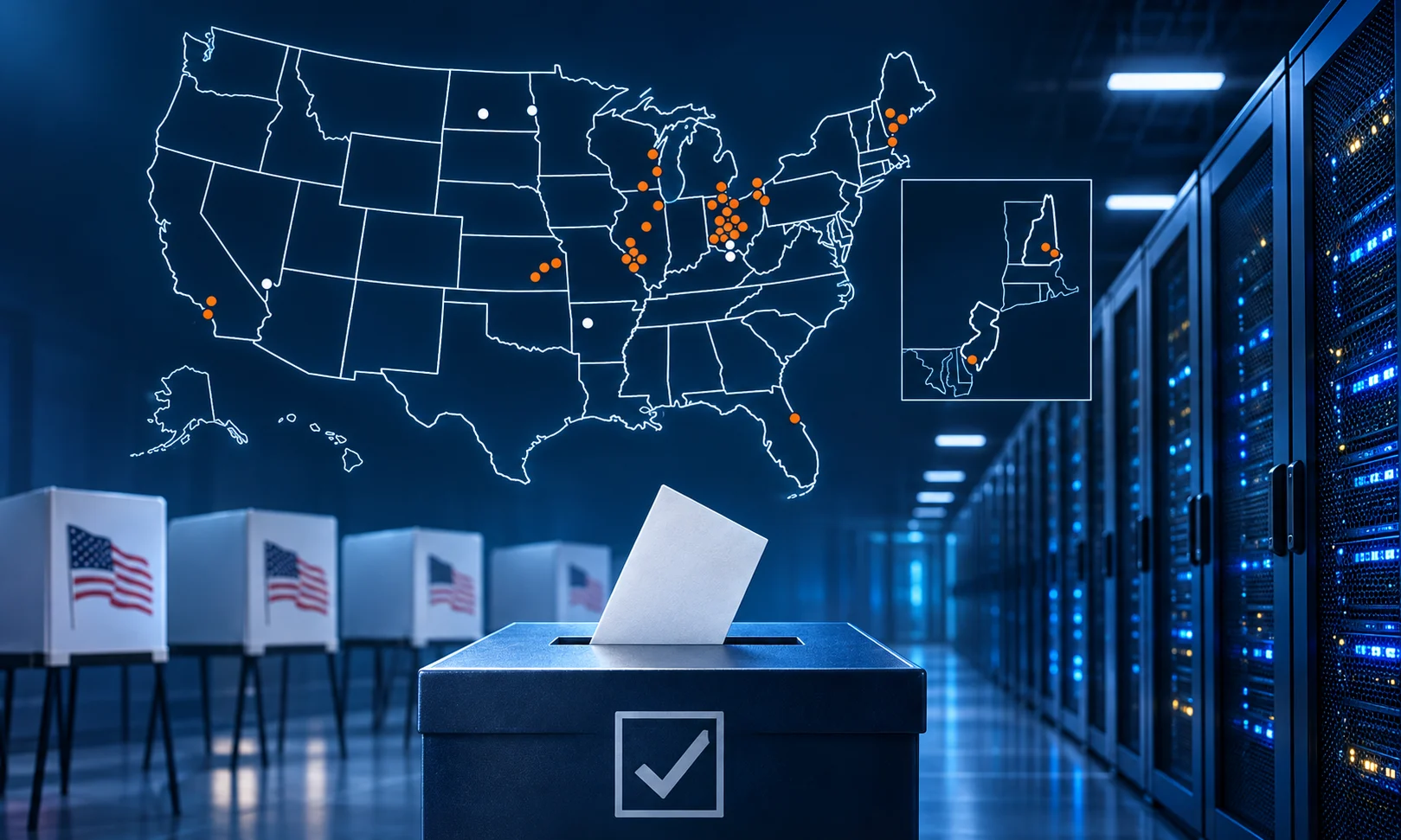
Voters in ten states decided 41 local ballot measures on data centers on November 3, the largest wave of such votes on record. This post tracks every one of them, plus the six decided earlier this year, the three still to come, and the recall elections the data center fights have produced, with an interactive map and results by state.

Stay In Touch