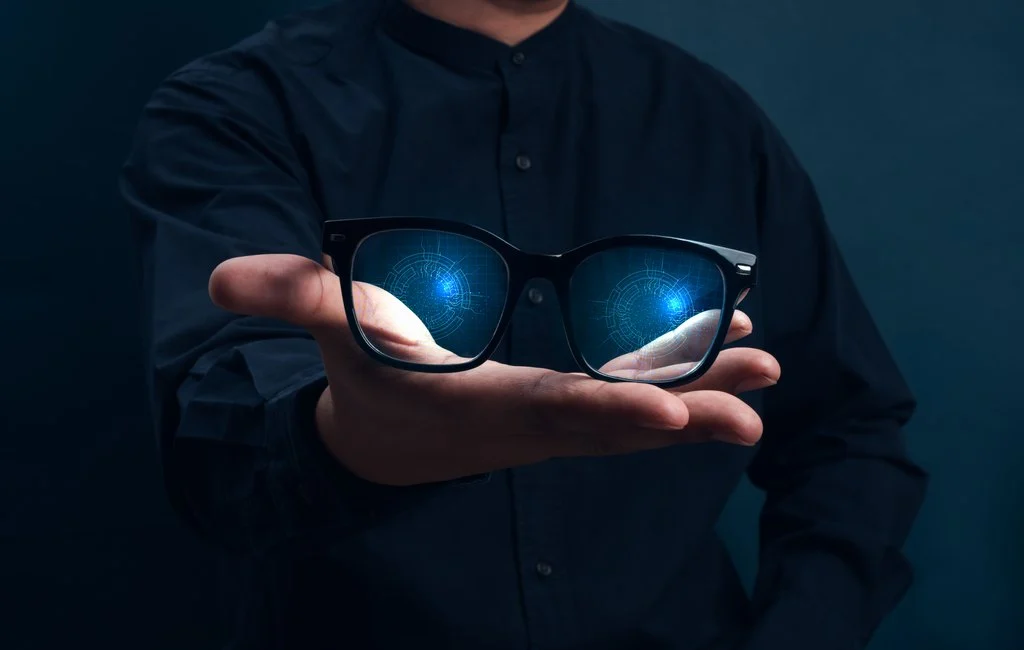
Smart glasses can translate conversations in real time, provide hands-free directions, capture images and audio, and help people with vision or hearing loss navigate daily life more independently. Because they can also resemble ordinary eyeglass frames, however, they present privacy and safety questions that laws written for phones, camcorders, and wiretaps do not always answer cleanly.
As of October 13, 2026, the state measures discussed below reflect three emerging regulatory models: restrictions on when users may record; product-design and disclosure requirements for manufacturers and sellers; and context-specific safety rules, including limits on use while driving. They also draw important distinctions among notice, actual knowledge, and affirmative consent. The following state-by-state analysis compares a vetoed California proposal, enacted laws in Illinois and Louisiana, and pending legislation in Pennsylvania.
California Smart Glasses Legislation: SB 1130 Vetoed
Status and scope. California’s Senate Bill 1130, sponsored by Sen. Eloise Gómez Reyes, would have regulated wearable devices designed to be worn on or attached to the body, rather than held, that can record sound or video or transmit it to another device or the internet. The bill excluded police body cameras, employer-issued work headsets and two-way radios, and standard wireless headphones. The Legislature sent the measure to Gov. Gavin Newsom in early September, and he vetoed it on September 30, 2026. In his veto message, Newsom supported the author’s objective but concluded that the definition of “wearable recording device” was broad enough to encompass products such as smartwatches, creating potential confusion and unintended consequences. He also noted that existing law already criminalizes electronic recording where a person has a reasonable expectation of privacy.
User obligations and penalties. The bill would have made it a crime to use a wearable device to record someone without explicit consent in a business area where that person has a reasonable expectation of privacy. The rule would have applied only in physical offices and retail locations where the public receives goods or services. Disabling a device’s recording light, sound, or other signal would also have been a crime. Violations could have resulted in a fine of up to $1,500 per violation, up to one year in county jail, or both. Exceptions covered hearing aids and other assistive technology used by people with disabilities. The bill also provided that recording a police officer from a public place, or from any location where the recorder had a right to be, would not by itself constitute a violation. It created no private right of action and protected device manufacturers and software providers from liability based solely on supplying the product.
Manufacturer and seller obligations. Beginning January 1, 2028, manufacturers and sellers could not have offered a wearable recording device in California unless it produced a light, sound, or other signal sufficient to alert a reasonable person nearby. The bill would also have prohibited the sale, purchase, or use of technology designed or marketed primarily to disable those signals. Knowing violations could have carried civil penalties of up to $2,500 each.
Illinois Smart Glasses Legislation: HB 4843 Signed Into Law
Status and scope. Illinois House Bill 4843, now Public Act 104-0682, brings smart glasses within the state’s distracted-driving law. Gov. JB Pritzker signed the measure on July 31, 2026, and it took effect immediately. Unlike the privacy-oriented measures discussed elsewhere in this article, the Illinois law treats smart glasses as a road-safety issue by adding “artificial intelligence smart glasses” to the Vehicle Code’s definition of an electronic communication device—the same category that includes handheld phones, tablets, and laptops. The law does not separately define “artificial intelligence smart glasses.”
Principal rule. Illinois drivers may not use an electronic communication device while operating a vehicle on a roadway, including to watch or stream video, participate in video calls, or use social media. Hands-free, voice-operated, and stopped-in-traffic exemptions remain available for other covered devices but do not apply to AI smart glasses. Accordingly, a driver may not use smart glasses while driving even if the device is hands-free or the vehicle is temporarily stopped in traffic.
Exceptions and enforcement. Existing exemptions continue to apply to on-duty law enforcement and emergency-vehicle operators, drivers reporting an emergency, and drivers parked on the shoulder. Penalties begin at up to $75 for a first offense and rise to $150 for a fourth or subsequent offense. If a violation causes a crash resulting in serious injury, disability, disfigurement, or death, the minimum fine is $1,000. Such conduct constitutes a Class A misdemeanor when another person is injured and a Class 4 felony when another person dies.
Louisiana Smart Glasses Legislation: Act 965 Now in Effect
Status and scope. Louisiana House Bill 410, sponsored by Rep. Laurie Schlegel, adds a chapter to state civil law governing in-person conversations recorded with wearable eyewear. The measure became Act No. 965 without the governor’s signature on June 25, 2026, and took effect August 1, 2026. The Legislature found that people generally expect face-to-face conversations not to be filmed, recorded, or transcribed without notice, and cited reported uses of smart glasses to record people covertly and post the footage on social media.
Principal rule. The law covers “direct conversations”: in-person conversations directed to specific people under circumstances in which a reasonable person would not expect to be recorded. A participant may not intentionally use a wearable eyeglass recording device to film, record, or transcribe such a conversation unless every participant receives specific notice. The law requires notice—not affirmative consent—and imposes no product-design or disclosure duties on manufacturers or sellers.
Exceptions. The law contains several broad categories of exceptions. It excludes public or semi-public proceedings, including hearings, press conferences, and rallies; law-enforcement and first-responder activity; and recordings of public officials performing public duties or recordings made to preserve evidence of public corruption or malfeasance. It also permits noninterfering recordings of police officers in public and recordings made to preserve evidence for criminal, civil, or administrative matters. Additional exclusions cover recordings by a participant in the participant’s own home, business, workplace, vehicle, or employer’s vehicle; recordings by a person who is not part of the conversation; and incidental or background capture in public places when the recording is not directed at specific people. The measure does not alter Louisiana’s Electronic Surveillance Act.
Enforcement. The remedy is civil rather than criminal. A violator may be liable to the injured person for damages, court costs, and reasonable attorney fees, but recovery requires proof of actual damages caused by intentional unlawful recording and dissemination.
Pennsylvania: HB 2603 Advances From Committee
Status and scope. Rep. Joe Ciresi introduced Pennsylvania House Bill 2603 on June 4, 2026. The proposal would add a subchapter governing wearable recording devices to the state’s wiretapping and electronic surveillance law. Ciresi’s co-sponsorship memorandum states that the measure is intended to apply existing recording rules to smart glasses without making the devices a liability risk for users. The House Communications and Technology Committee, which Ciresi chairs, reported the bill as amended on October 7, 2026. The analysis below reflects the committee-reported version.
Product and seller obligations. As amended, the bill would require every wearable recording device manufactured, sold, or offered for sale in Pennsylvania to include a “recording indicator.” That can be a light, sound, or other signal that is prominent and continuous enough, or frequent enough, to alert a reasonable person nearby that the device is capturing sound or video. The definition would cover devices worn on the body that can record sound or video and either store the recordings, transmit them to another device, the internet, or a cloud service, or process them for biometric identification. The bill would prohibit the sale, purchase, or acquisition of any device, code, or technology designed or primarily marketed to disable the indicator, and would bar anyone from disabling or obstructing it. It would also prohibit using biometric data generated by a wearable recording device to identify anyone other than the wearer, and it would prohibit offering products or services designed for that purpose. Manufacturers would be required to provide a mechanism for reporting indicator malfunctions, while retailers would have to give purchasers a separate written notice explaining the rules governing device use.
User obligations. The bill would establish two distinct standards for wearers, defined as people who wear a device and use it to capture sound or video of others. First, a wearer could not use a wearable device to record another person in an area where that person has a reasonable expectation of privacy without explicit consent. Second, a wearer could not record another person anywhere without that person’s actual knowledge if the device lacks an indicator or the indicator has been disabled. Incidental or background capture in public places that is not directed at specific people would not count as recording under the bill. Exemptions would apply to law-enforcement officers conducting lawful criminal investigations and to law-enforcement and corrections personnel acting for security purposes or investigating misconduct by a person in custody.
Enforcement. A knowing violation would generally constitute a third-degree misdemeanor. A retailer that failed to provide the required notice would first receive a warning from the Attorney General or district attorney and 30 days to cure the violation. Subsequent violations could carry civil penalties of up to $500 for a second violation and up to $1,000 for later violations. Manufacturers that knowingly violate the device requirements could face a $500 penalty per product, increasing to $750 to $1,000 per product for a second violation within 12 months and $1,000 to $1,500 per product for a third. The bill would take effect 180 days after enactment.
Three Emerging Regulatory Models
The four measures illustrate different regulatory choices. California and Pennsylvania considered both user conduct and product safeguards; Louisiana regulates notice during direct conversations; and Illinois addresses device use only in the driving context. The enforcement mechanisms likewise vary, ranging from criminal penalties and administrative fines to a civil action requiring proof of actual damages.
The measures also use three different privacy standards. Notice requires disclosure that recording is occurring but does not necessarily require agreement. Actual knowledge focuses on whether the recorded person is genuinely aware of the recording. Explicit consent requires an affirmative agreement and is therefore the most demanding standard. Whether lawmakers choose one of these standards—and whether they impose compliance duties on users, manufacturers, sellers, or all three—will determine how broadly future smart-glasses laws affect ordinary use.
Smart Glasses Legislation: Practical Questions
- Do ordinary recording laws still apply to smart glasses?
- Yes. Device-specific legislation generally supplements rather than replaces state wiretapping, electronic-surveillance, privacy, and distracted-driving rules. A recording indicator or other product safeguard does not independently make a recording lawful.
- Does an indicator light itself satisfy notice or consent requirements?
- Not necessarily. The measures described here treat an indicator as a product safeguard, while Louisiana requires specific notice and the California and Pennsylvania proposals use explicit-consent or actual-knowledge standards in defined circumstances. Compliance therefore depends on the governing law and the context of the recording.
- Who may bear responsibility: the user, manufacturer, or retailer?
- The answer varies by jurisdiction. Louisiana regulates participants in direct conversations, Illinois regulates drivers, and Pennsylvania’s introduced bill would impose separate duties on users, manufacturers, and retailers. California’s vetoed proposal likewise combined user restrictions with manufacturer and seller requirements.
- Do the measures protect accessibility uses?
- California’s vetoed bill expressly excepted hearing aids and other assistive technology used by people with disabilities. The scope of any protection elsewhere depends on the text of the applicable measure and the continued operation of other state and federal law.
Latest News

Photo credit: iStock.com/StockRocket The “right to repair” has become a growing national conversation, centered on the idea that consumers should have access to the tools, parts, software, and information needed to repair or maintain the [...]

Photo credit: iStock.com/Urupong Since our last update on social media regulation for minors, the conversation around protecting young users online has intensified, with states across the U.S. advancing bold legislative measures in 2025. From Nevada’s [...]
Photo credit: iStock.com/StudioGraphic As technology continues to evolve, digital driver's licenses (also known as mobile IDs) are gaining traction across the United States. States are increasingly exploring legislative measures to modernize driver identification systems, enabling [...]
NetChoice and AI regulation In this episode of the Back in Session podcast, hosts Ryan Stevens and Ryan DeMara sit down with Amy Bos, Director of State and Federal Affairs at NetChoice, to discuss the [...]

Stay In Touch